
The Power of a Fresh Page: Papermaking as a Therapeutic Outlet for Veterans
Frontline Paper visited Middlesex College to demonstrate an art space for veterans to share experiences and heal through creativity.
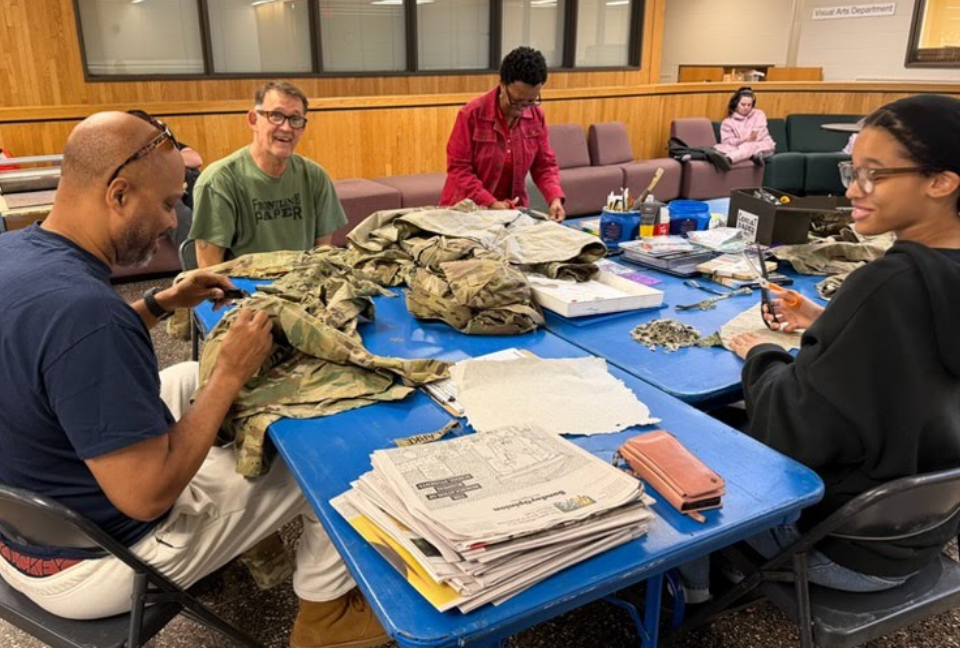
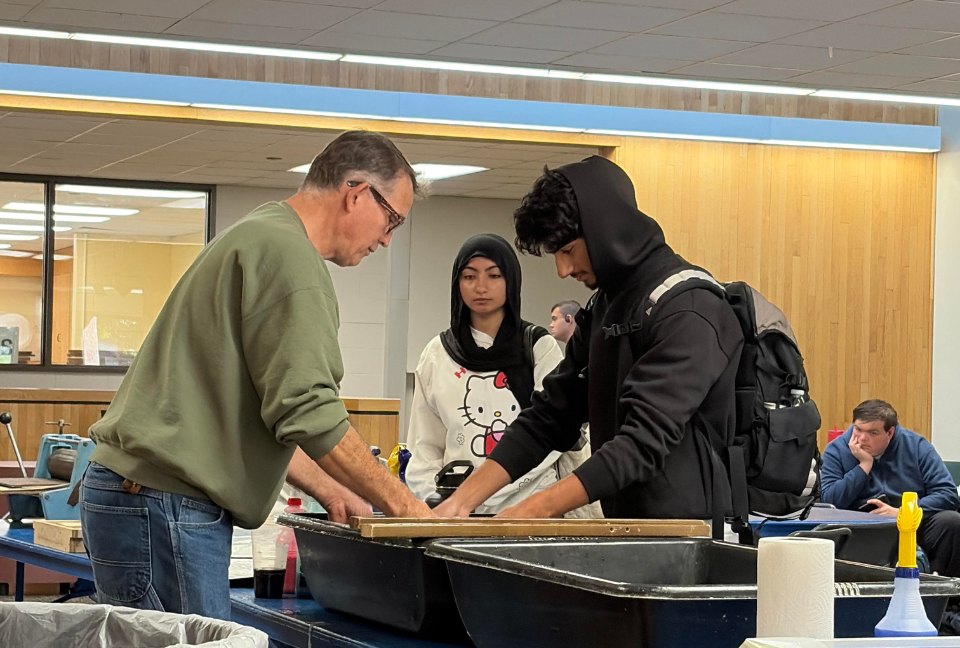
Frontline Paper set up a weeklong papermaking workshop at Middlesex College in October—complete with beater machine—showing students how they can turn clothing rags into pulp, and that pulp into paper that they can use to create their own designs, paintings, books, or different styles of artwork.
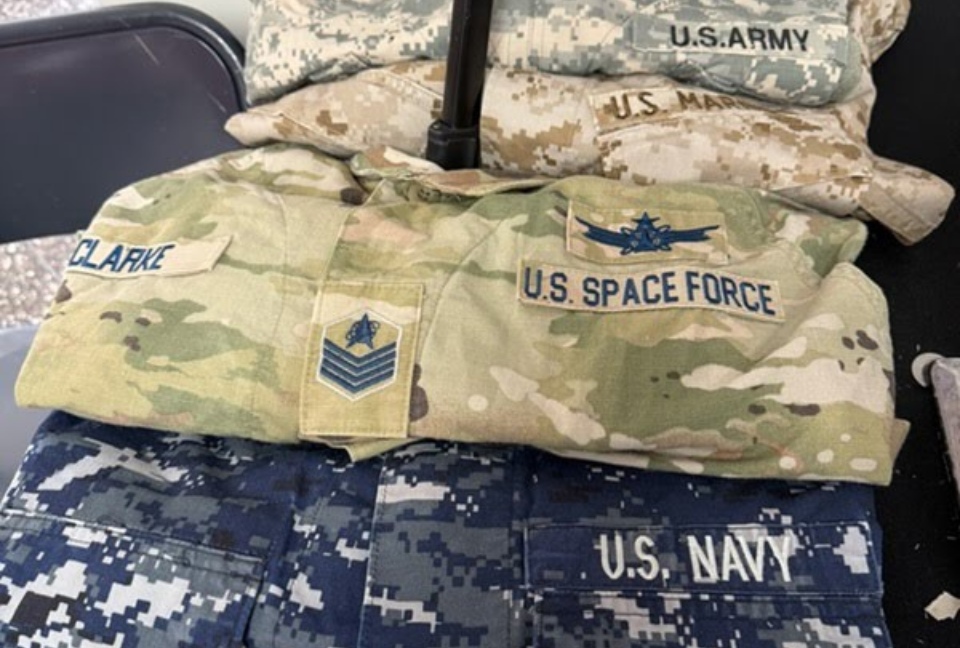
The Branchburg, New Jersey-based organization, originally called Combat Paper NJ, is tailored to veterans, who are encouraged to bring in their old military uniforms to become small rags that are transformed into sheets of paper to use in artmaking. The idea is that the resulting artwork can be cathartic to process military experience or a lasting reminder of their time served.
“Part of our mission is also creating a community,” said Frontline Paper program manager Ron Erickson, a Marine Corps veteran. “Part of it is ending the culture of the silent veteran and creating a dialogue with the greater community.”
Erickson says that this is a way to create a comfortable discourse between fellow veterans as well as civilians and student-veterans on campus. Many, who are often older, don’t necessarily identify themselves freely. This type of activity helps walls come down and allows student-veterans to find a safe place to discuss their experiences.
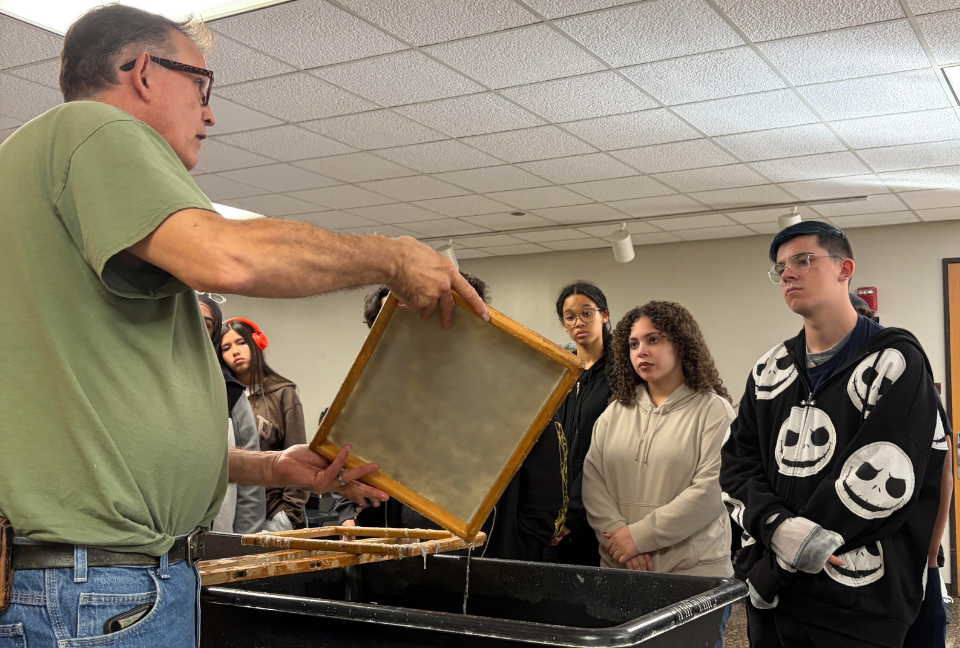
Middlesex College Visual Arts Professor Maria Marshall was one of many who brought a class to meet Erickson, hear about the Frontline Paper program, and observe the papermaking process.
“This is amazing,” Marshall said. “The great thing is how the story of the fabric is in the color and texture of the paper.”
Erickson brought multiple orange buckets full of pulp as well as shallow tubs where screens are lowered into a trough of pulpy water. After collecting a thick layer of pulp, he removed the screen and leaned it over to dry. Once all the water has drained, he lays it in a second shaping tub. What’s left becomes a hearty stock of paper.
With our world being largely digital, today’s Middlesex College students use less paper than ever. That was another reason why Marshall wanted her visual arts students to see this process.
“We don’t get to do as much hands-on work because there is so much technology everyone has to learn,” Marshall said. “You’re teaching design, but also software skills. It’s hard because there are always more programs to learn. Having these types of experiences is so important to bring a hands-on experience to a digital program.”
Erickson, who grew up in Bergen County, New Jersey, was always artistically inclined. Shy about his own service record, he found an outlet in papermaking and connecting with other veterans. He says the first time he sunk his hands into a vat of pulp, he felt energized. Now, he laughs that just getting students to know that rags can be turned into paper is an accomplishment.
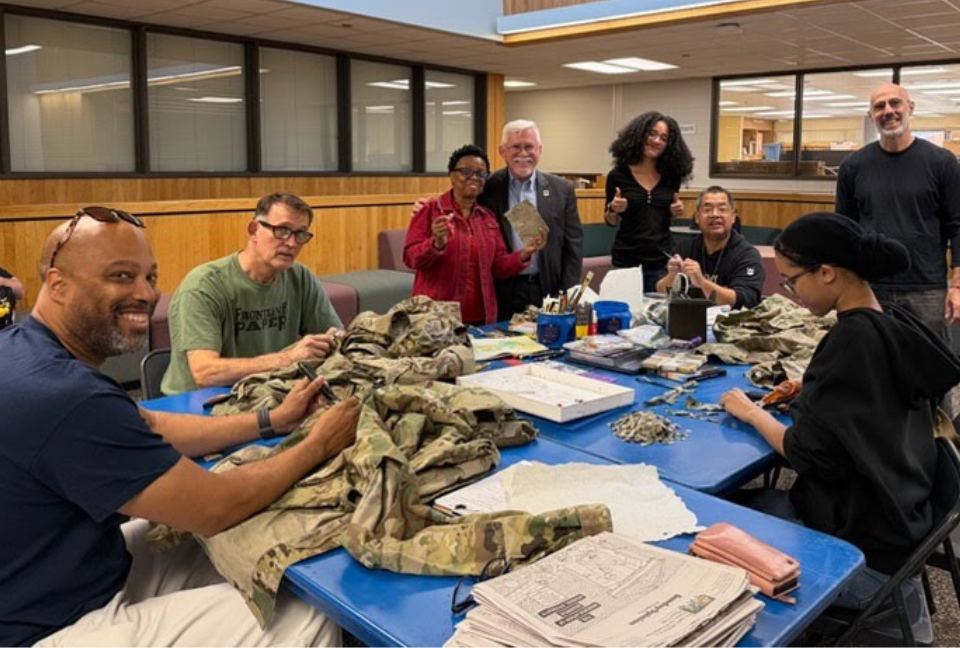
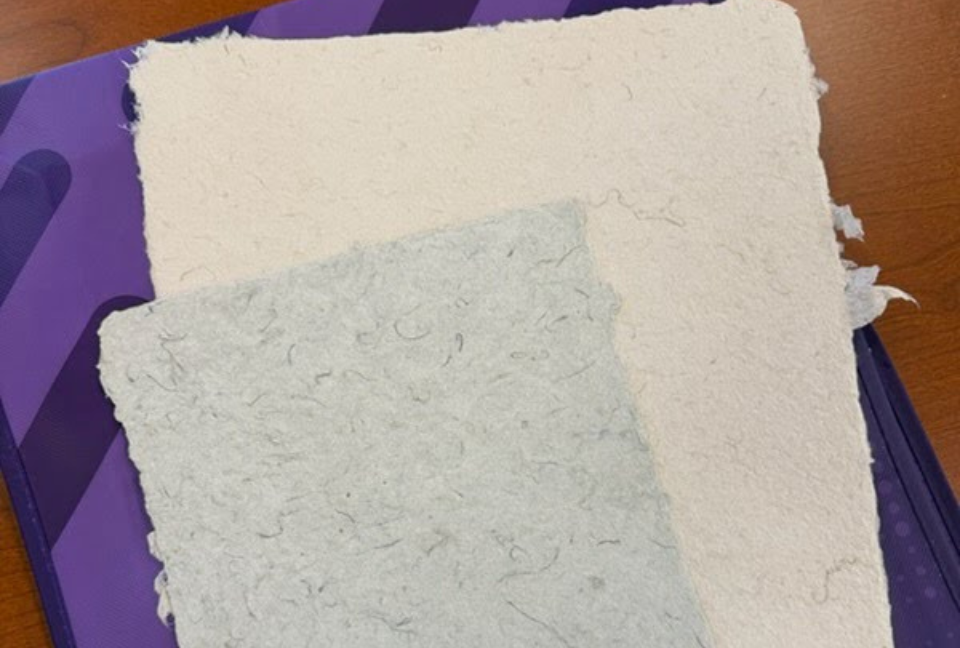
On a deeper level, what’s eventually put on that paper can serve as a fulfilling outlet for veterans.
“By taking what’s inside and putting it up on a wall, you’re now inviting someone to talk about it,” Erickson said. “You’ve taken control of that narrative. You’re no longer a victim of your narrative.”
