
Standing Together for Ovarian Cancer Awareness
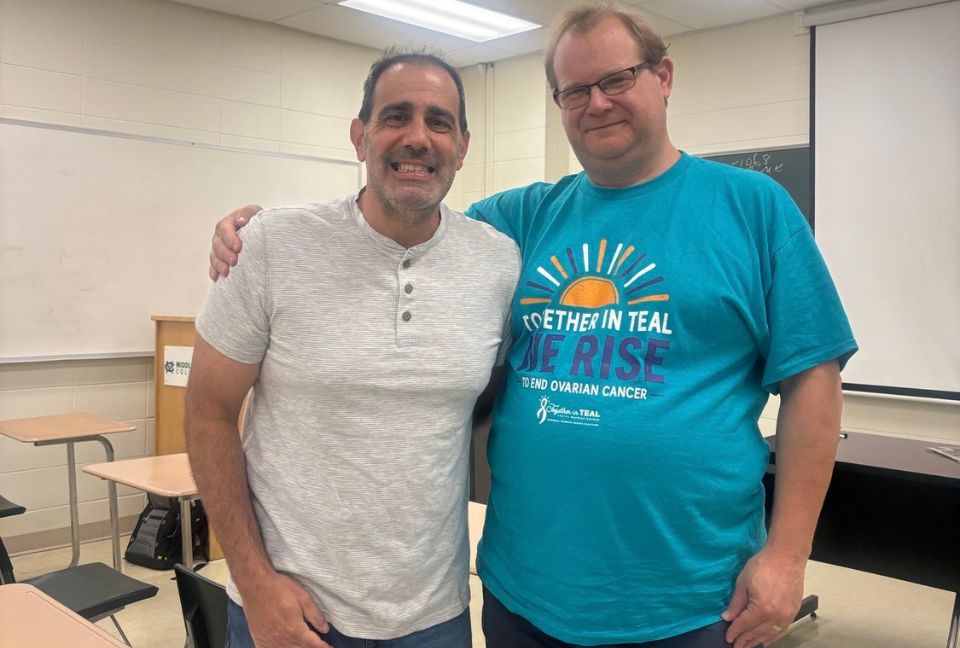
Members of the College community participated in a “Wear Teal Day” on September 24 in observance of Ovarian Cancer Awareness Month.
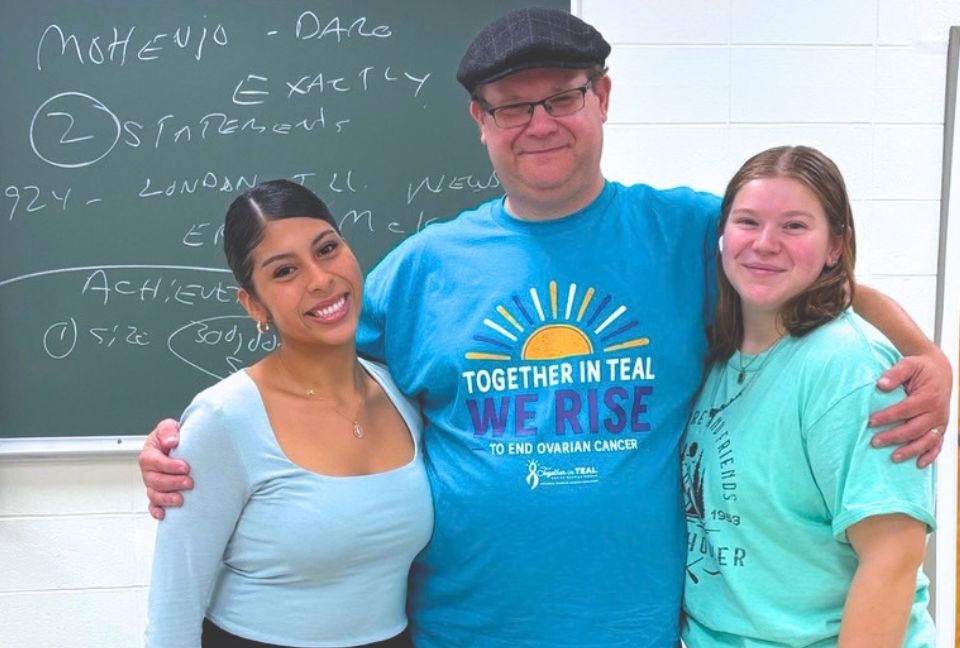 (l-r) Rosalyn Aguilar, History and Social Sciences Professor Andrew Dzurisin III, and Courtney Lake
September is Ovarian Cancer Awareness Month – a moment to raise awareness, support those impacted, and encourage everyone to learn the signs and symptoms of this detrimental illness for which about 20,000 women in the U.S. are diagnosed with each year. In support of this cause, members of the Middlesex College community participated in a “Wear Teal Day ” on September 24.“Symptoms for ovarian cancer are often vague and may include bloating, changes in bowel/bladder patterns, and pelvic and abdominal pain,” said Elizabeth DeCarlo, program coordinator of the joint Middlesex College/Hackensack Meridian Health Nursing Program. “Unfortunately, there are no routine screenings for ovarian cancer. However, with self-awareness and open dialogue with your provider, further testing can be done.”
According to the American Cancer Society, about 1 in 91 women are at risk of getting ovarian cancer in their lifetime. Early detection can be rare due to lack of screening tools, and many discover the cancer by the time it has already advanced. This makes awareness vital in the fight against one of the leading causes of cancer-related deaths among women.
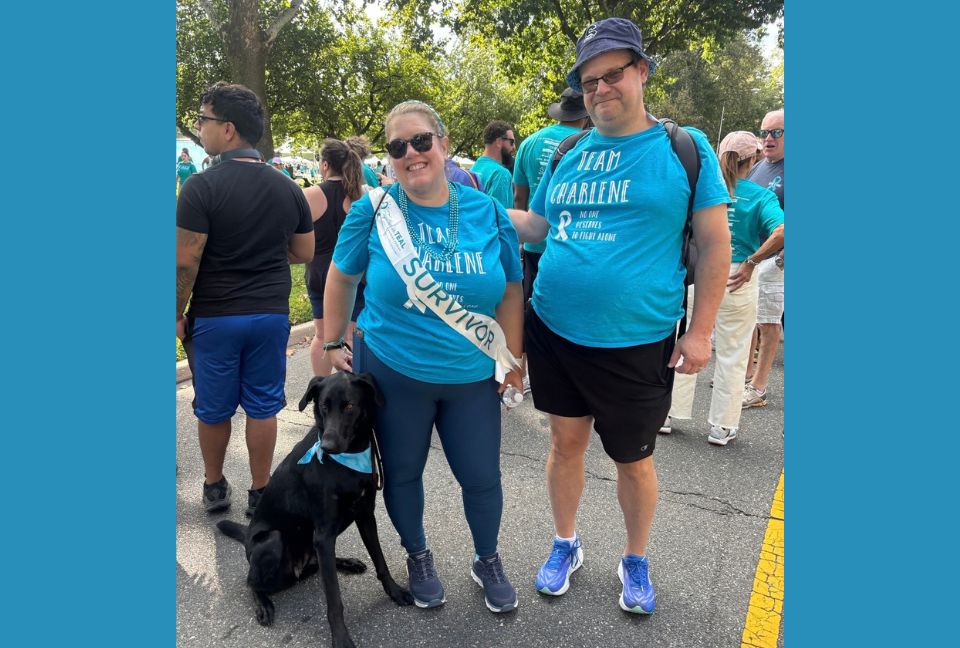
Middlesex College History and Social Sciences Professor Andrew Dzurisin III, the spouse of an ovarian cancer survivor, is an advocate in the battle to fight the illness. Dzurisin and his wife, Charlene, dedicate themselves to supporting various cancer institutions and fundraising events, and he himself serves as a policy advocate to lobby Congress for additional funding for research and treatment.
“Seeing your wife go through chemo was devastating—I felt like there was very little I could do to protect her,” said Dzurisin. “We care about this cause not just because of our personal experience, but because we want to try to increase awareness so that other couples do not have to go through what we have.”

The good news is that ovarian cancer incidences and deaths have declined over the past several decades, likely due to advances in medicine and oral contraceptives. The American Cancer Society shares that the rate of ovarian cancer deaths has decreased by 45% since 1976. Most of this progress has happened since the mid-2000s. But the work is not done, which is why advocates are continually pushing for more research and awareness.
“Women know their body best,” said DeCarlo. “My advice is to advocate for yourself. If something feels off, talk to your care provider as soon as possible. The earlier ovarian cancer is detected and treated, the more likely the chances are for a positive outcome.”
For more information on ovarian cancer, visit: https://www.cancer.org/cancer/types/ovarian-cancer.html
