
The Jersey Shore Is a Sand-sational Living Classroom
Oceanography students explore our coastal ecosystem at Sandy Hook beach.
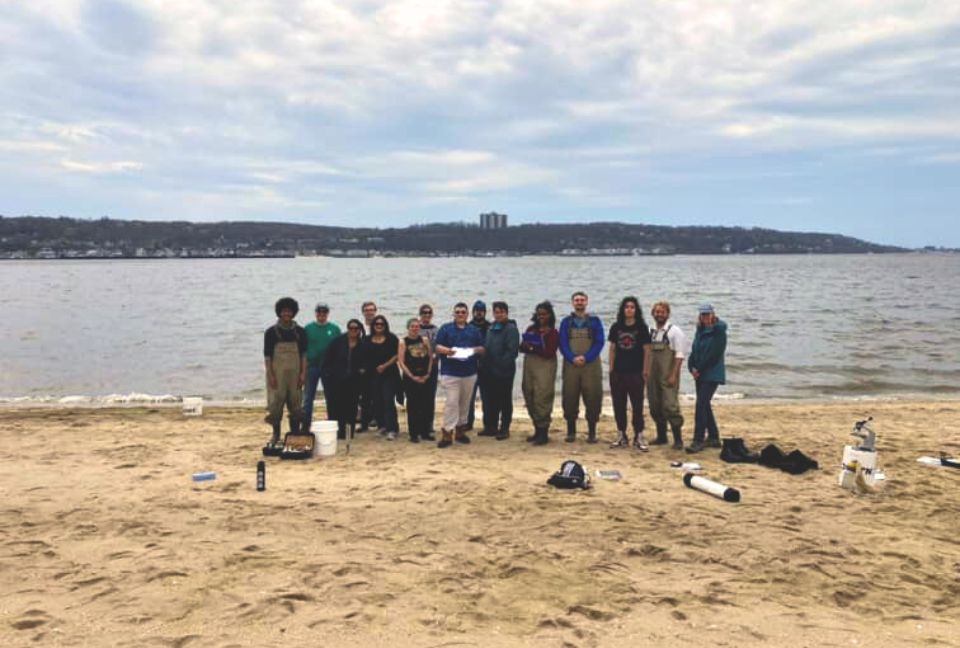
Every summer, caravans of people from across the state and beyond travel to the Jersey Shore to unwind and feel the salt air on their skin. This landscape not only provides visitors with entertainment and leisure, but a unique chance for Middlesex College students to escape the classroom and learn about the natural world.
At the end of each Spring semester, students in Professor Claire Condie’s Oceanography course take a field trip to Gateway National Recreation Area, also known as Sandy Hook, to participate in hands-on educational experience through the New Jersey Sea Grant Consortium.
On the drive down the shore, the group observes the dynamic processes and shape of the coastline, examining the waves, tides, currents, sediment transport, and beach formation. They then discuss coastal engineering structures, enhanced to reduce erosion after Hurricane Sandy. These tangible observations reinforce classroom discussions while illustrating the importance of environmental stewardship.
“This immersive experience provides Middlesex College students with the opportunity to engage directly with New Jersey’s coastal and marine environments while connecting classroom concepts to real-world coastal and marine science,” said Condie. “Working alongside scientists from the Consortium, the students are able to explore New Jersey’s coastal ecosystem firsthand, transforming textbook concepts into a classroom without walls.”
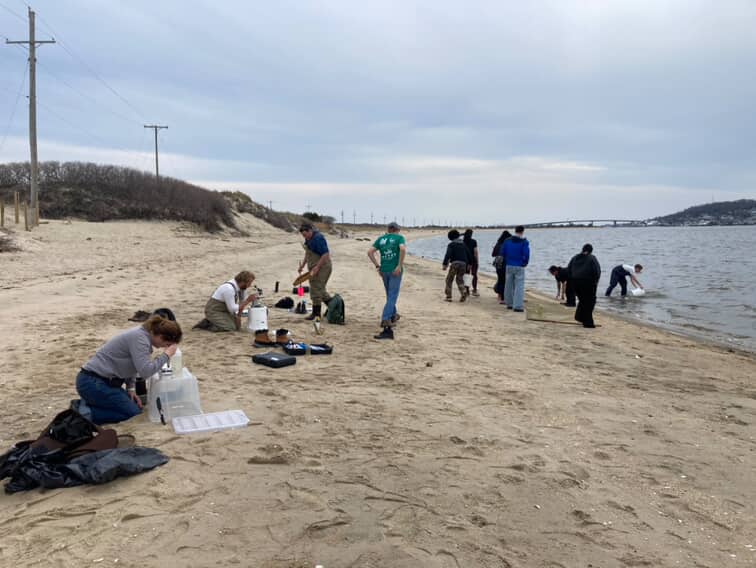
The New Jersey Sea Grant Consortium is a nonprofit organization dedicated to promoting the wise use and stewardship of New Jersey’s coastal and marine resources through research, education, and public outreach.
Throughout the semester, students examine how changes in ocean chemistry influence marine ecosystems. In the field, they apply that knowledge by collecting water samples to analyze chemical properties, such as levels of pH, nitrate, phosphate, and salinity.
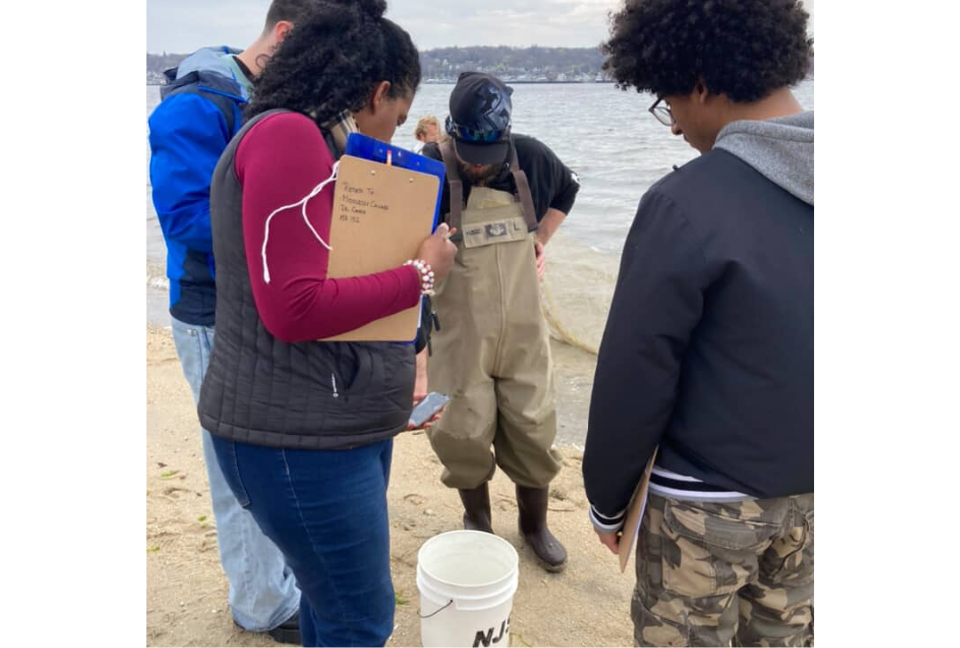
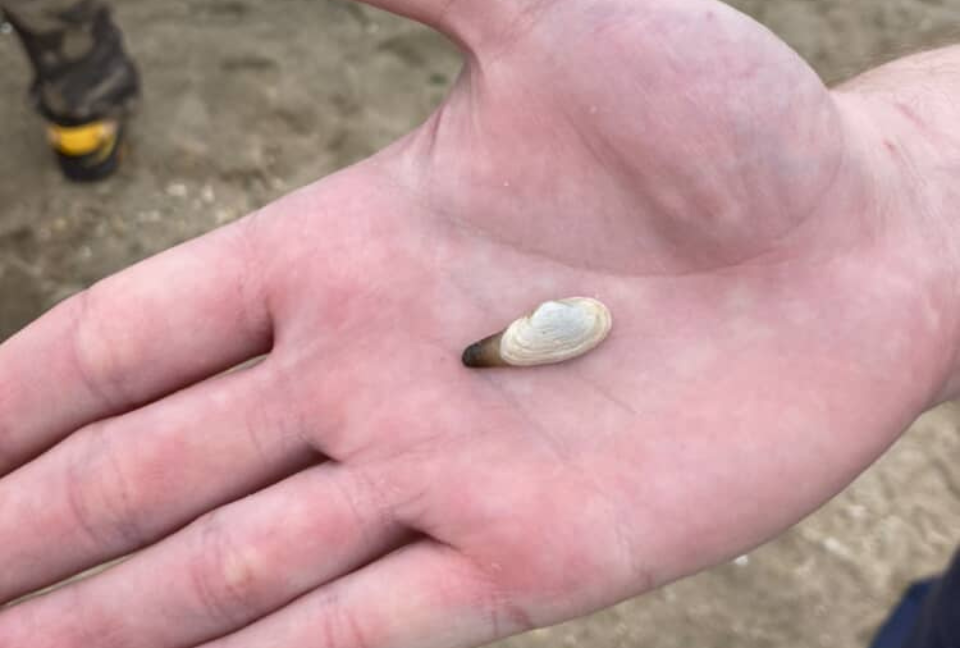
“It’s one thing to talk about the mechanics of the ocean on a whiteboard or seeing it happen on a laptop screen, but actually being there and observing natural occurrences enhanced my understanding of the concepts we were learning,” said oceanography student Brady Boslet. “Although I am not a student majoring in STEM, this class effectively engaged me in the realm of science, and it is by far my favorite class that I have ever taken. Interactive events like our trip to Sandy Hook can be valuable to STEM and non-STEM students alike, allowing them to engage in the topics beyond the classroom setting and explore real data collection methods used in the field.”
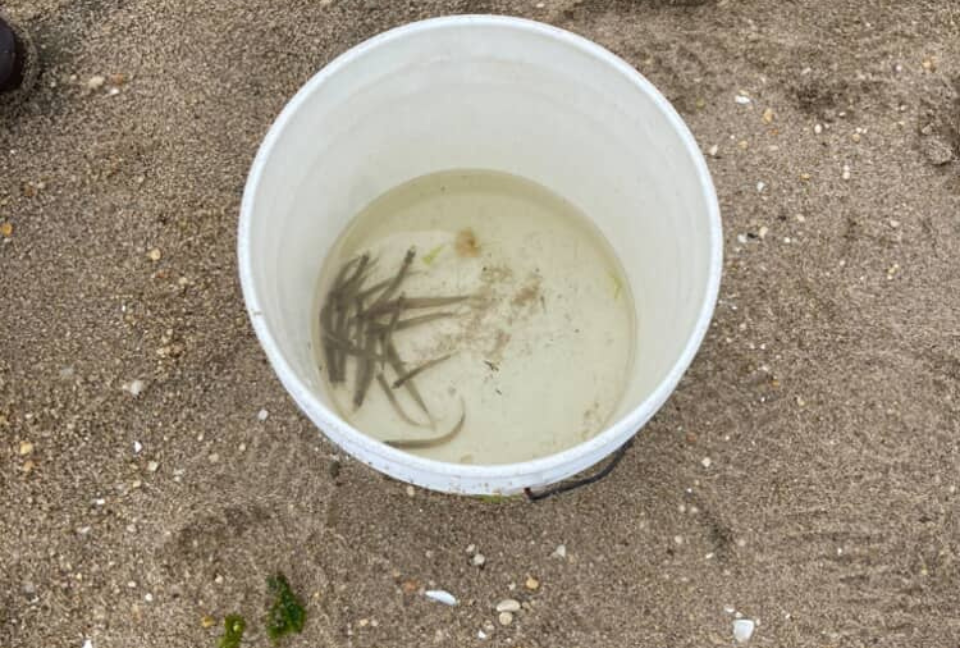
The students also practiced seine fishing, where they had the option to jump in some waterproof waders to collect and identify marine organisms, providing up-close experience with New Jersey’s coastal biodiversity. These practices were brought back to the classroom where the students graphed and analyzed their data to make scientific conclusions.
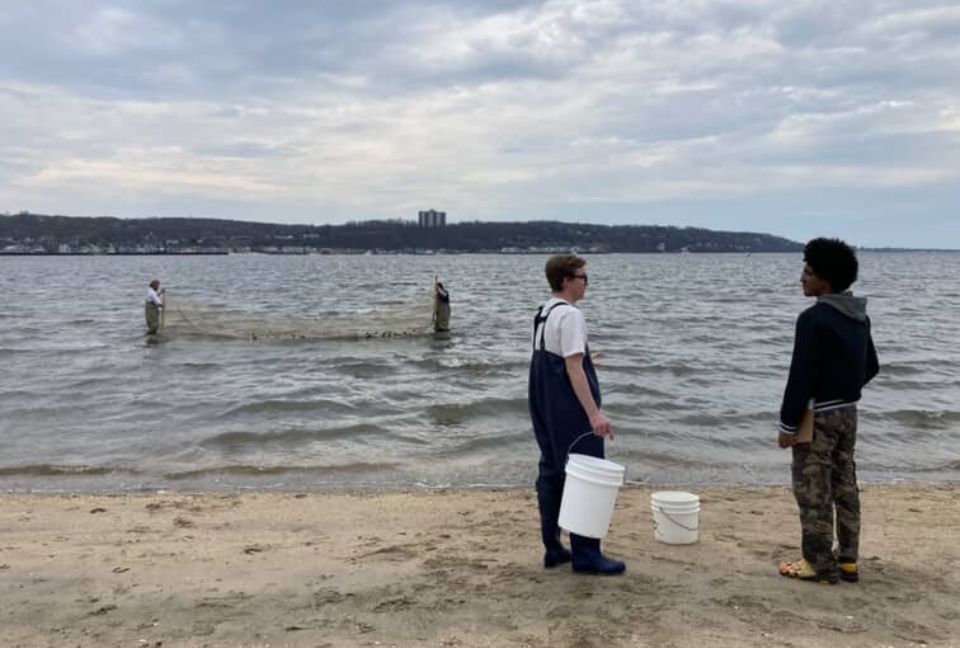
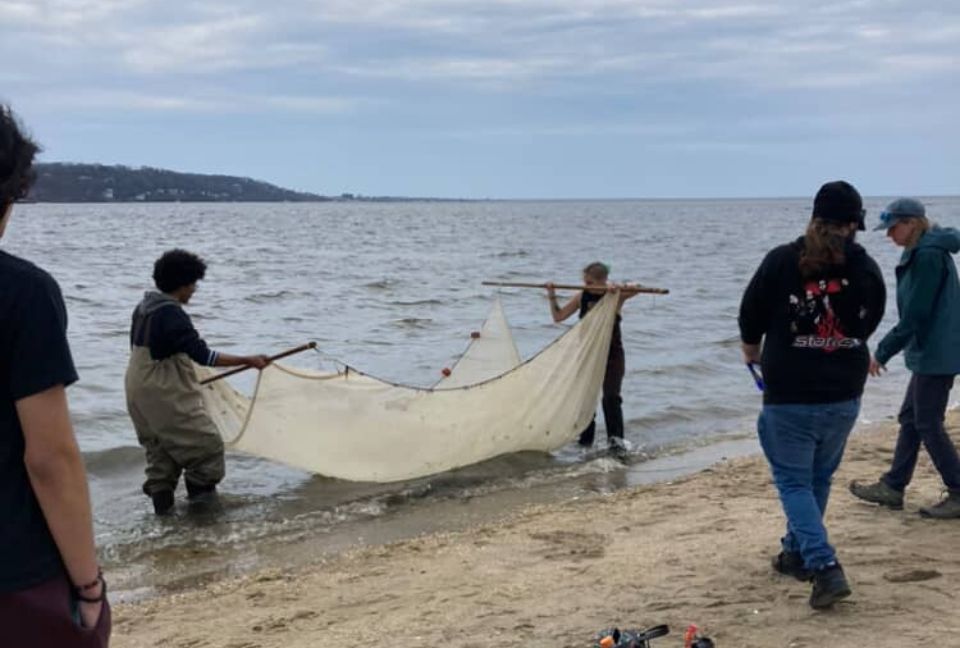
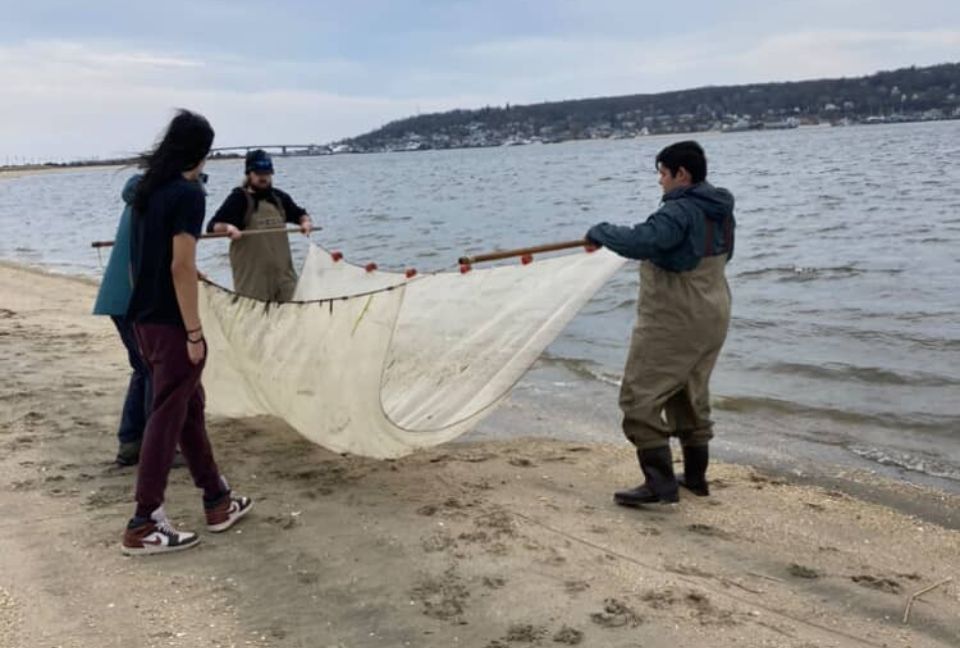
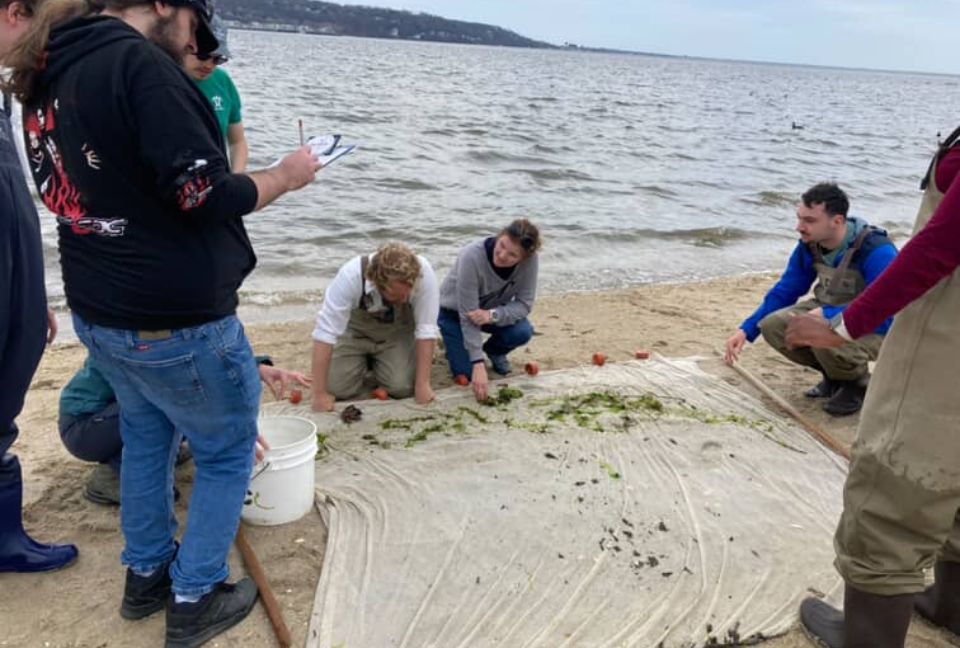
“Getting into wetsuits, feeling the power of that water and wind makes you wonder—what causes this?” said oceanography student Gabriel Friedman.
“By connecting scientific theory with authentic field investigation, students leave with a deeper understanding of oceanographic principles, an appreciation for New Jersey’s coastal resources, and firsthand experience applying the scientific method to real-world environmental challenges,” said Condie. “Science is not just something to study—it is something that can be experienced, inspiring curiosity, building confidence, and reminding students that learning can be both meaningful and enjoyable.”
