
Middlesex College and Thomas Edison State University Agree to Seamless Transfer Process
The articulation agreement creates a clear pathway for students by reducing credit loss, delays, and added costs as they continue their undergraduate education
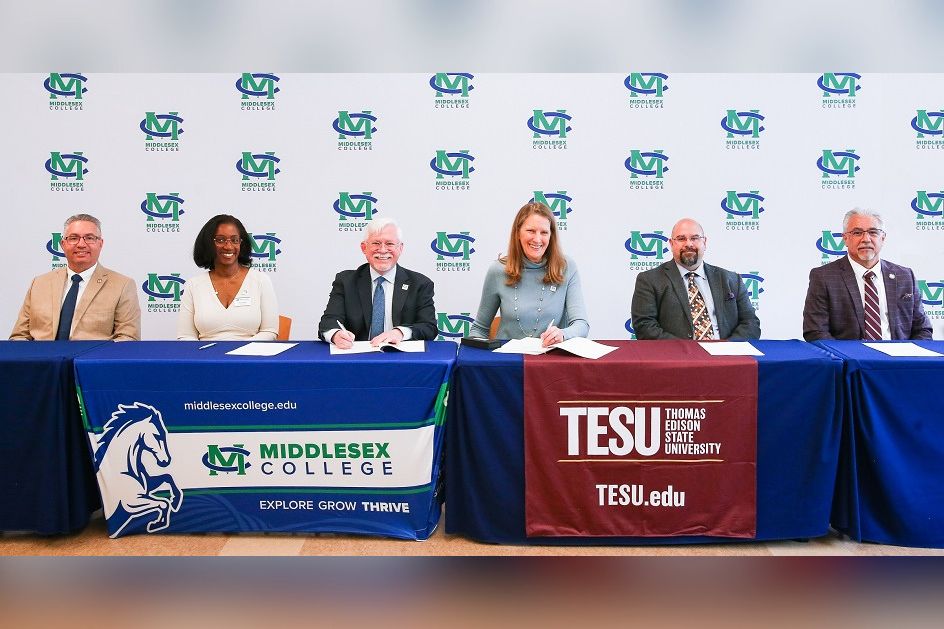
Middlesex College students in pursuit of a bachelor’s degree are now eligible for seamless transfer to Thomas Edison State University (TESU) as part of a new partnership between the two institutions.
The agreement creates a clear pathway by reducing credit loss, delays, and unnecessary costs as students move further in their undergraduate education.
“Middlesex College is proud to partner with Thomas Edison State University in providing quality, accessible education for students to achieve their academic goals,” said Middlesex College President Mark McCormick.
This new pathway will allow students to complete 90 credits at Middlesex College and their bachelor’s degree with TESU online. This is particularly valuable for working adults, providing them with the flexibility that online courses allow.
“This partnership reflects our shared commitment to expanding access to high-quality, flexible education for New Jersey students,” said Dr. Merodie A. Hancock, president of Thomas Edison State University. “By creating a seamless transfer pathway, we are helping more learners build on their academic achievements, minimize barriers, and complete their degrees in a way that aligns with their professional and personal responsibilities. The inclusion of Credit for Prior learning into 2+2 and 3+1 agreements like this reflects TESU’s ongoing commitment to merging higher education and apprenticeship training.”
The mutually beneficial agreement provides Middlesex College graduates with a reliable route to complete their bachelor’s degree at TESU, while providing TESU with well-prepared transfer students who are ready to succeed.
“Thomas Edison State University has a long-standing reputation for serving adult and transfer students through flexible, high‑quality degree completion programs,” said Middlesex College Vice President of Academic Affairs Dionne Miller. “This articulation agreement builds upon that strength and provides our students with a structured, efficient pathway to a four‑year degree, while allowing them to remain rooted in their community. This is an important step in supporting the educational growth and long‑term economic mobility of our students.”
