
Hunger Banquet Gives Students Food for Thought
The experiential lunch gave students the opportunity to simulate the imbalance of food distribution and think critically about hunger inequality.
Highlighting the holistic impacts of food availability and income status, Middlesex College Professor Nicole Gonzalez hosted a Hunger Banquet for her Social Psychology class on December 8.
“I tell my class that everything is Social Psychology,” said Gonzalez. “We are who we are because of the people around us, and food is such a great example of that.”
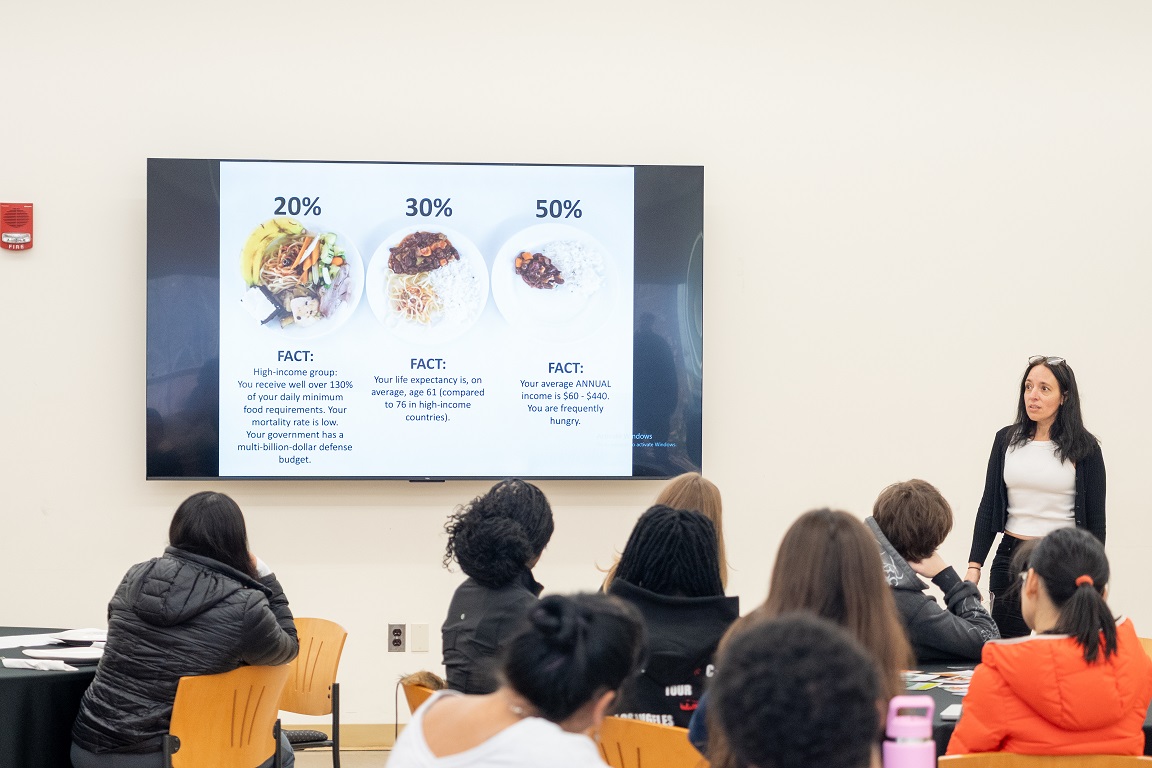
The idea for a Hunger Banquet comes from OxFam, an international organization dedicated to issues involving food scarcity. Gonzalez followed OxFam’s model where each participant drew a random ticket reflecting their income status. Ten percent of the tickets were marked high-income, 40 percent middle-income, and 50 percent low-income.
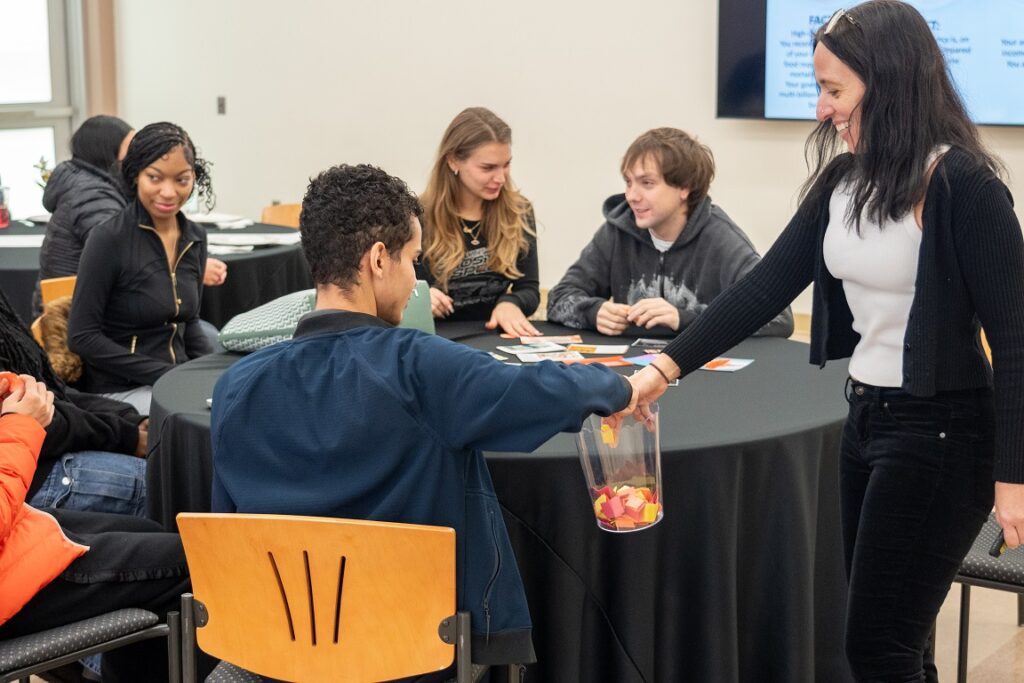
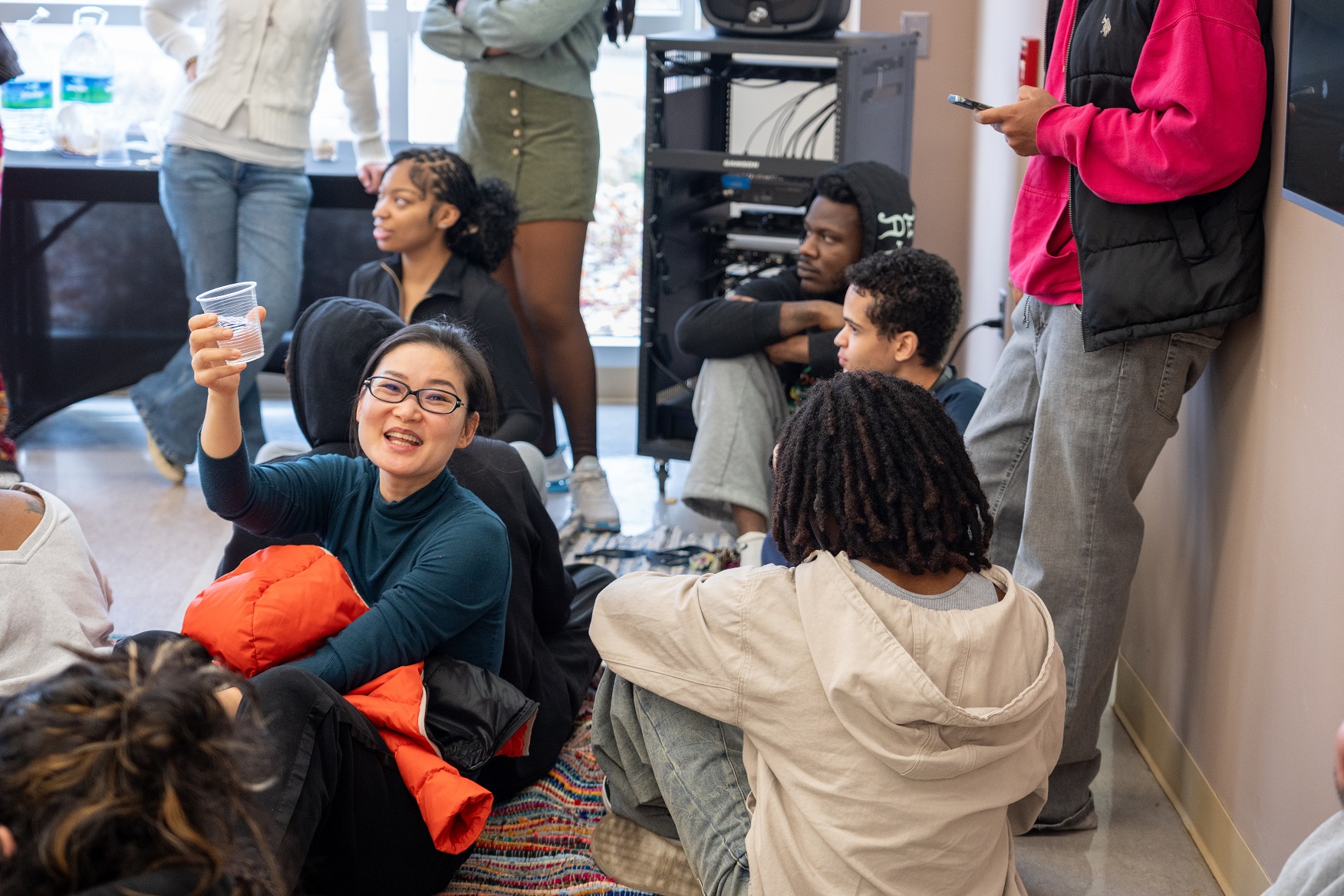
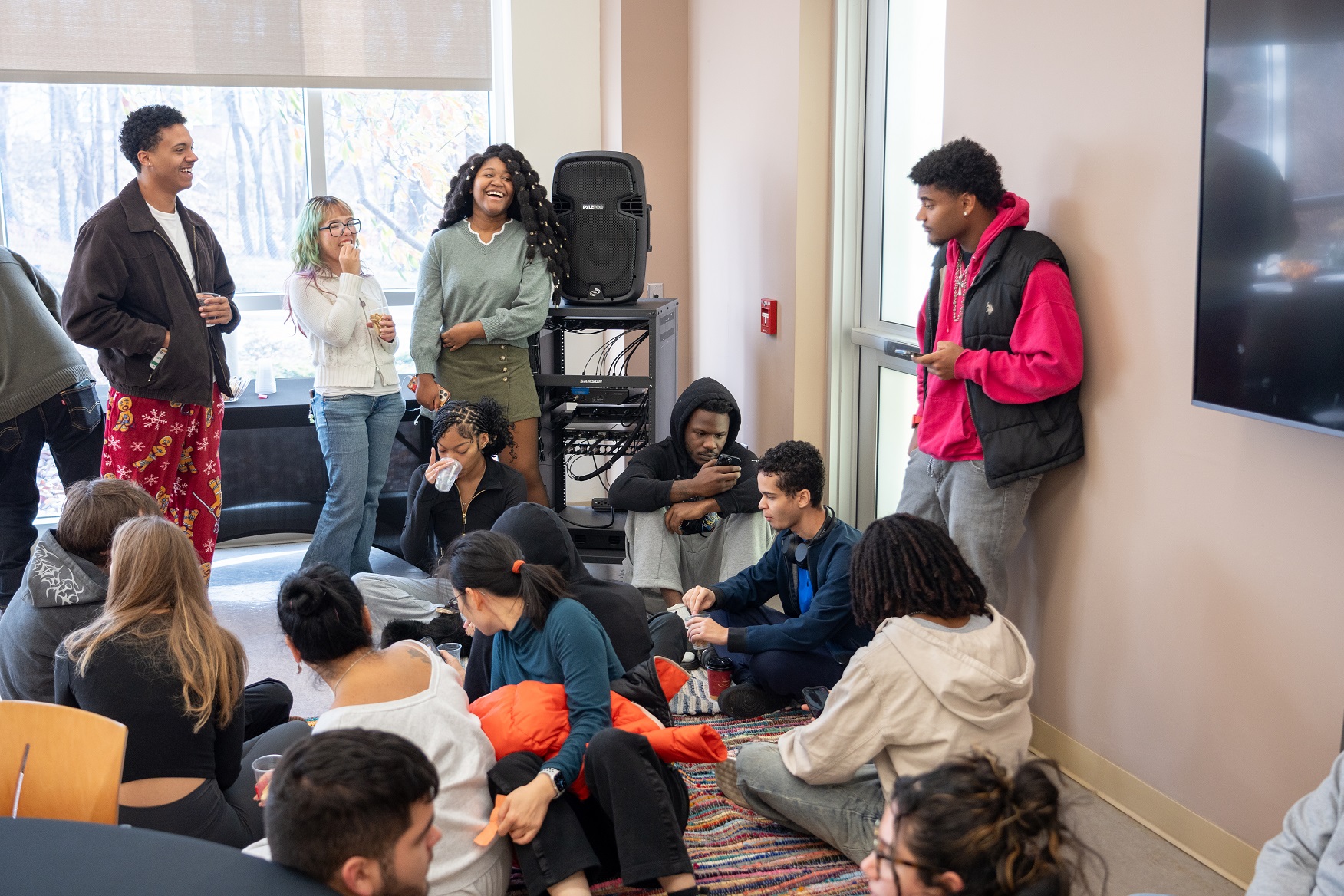
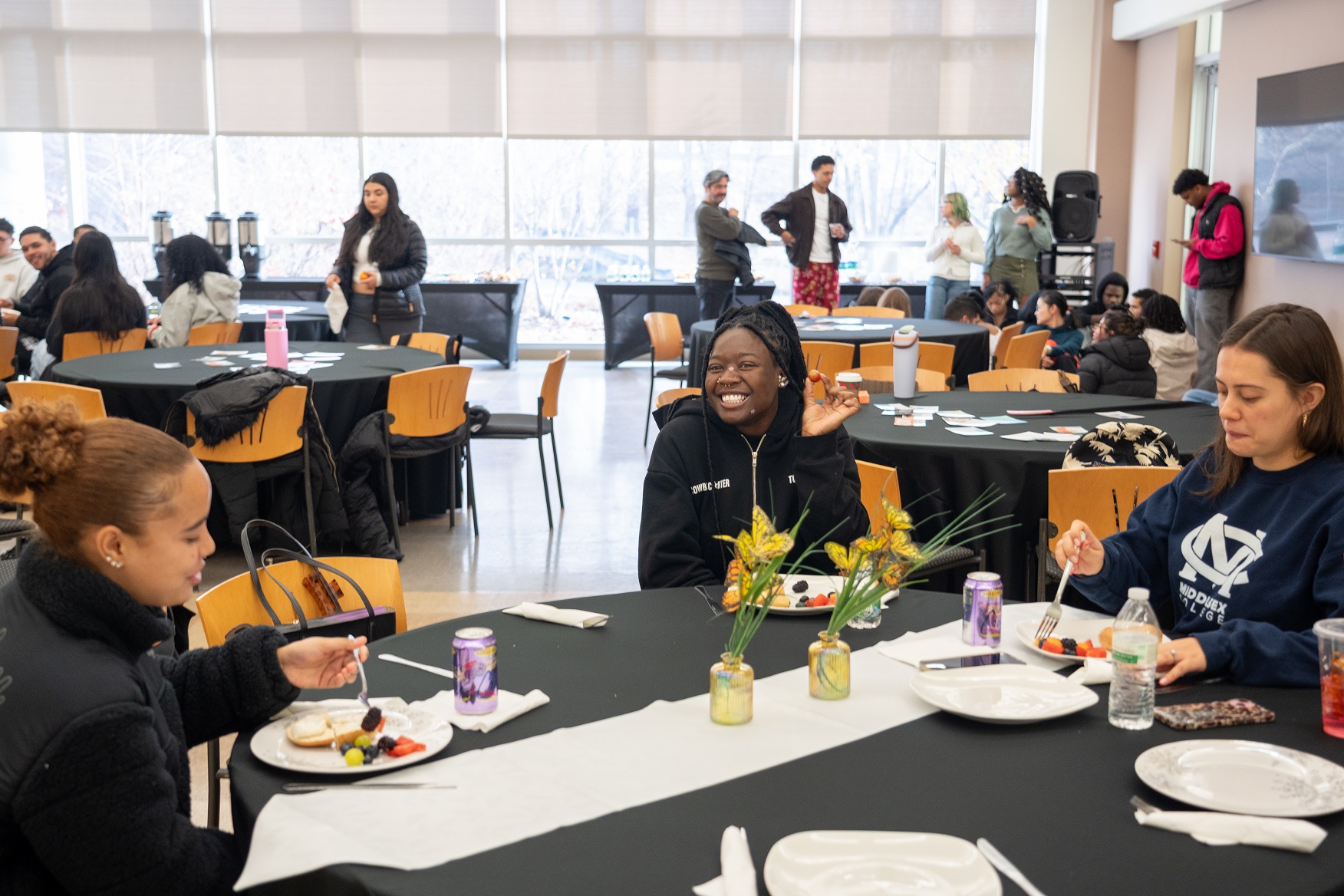
High-income participants were able to partake from a table with water bottles, fresh fruit salad, pastries, and cookies and sit at a table decorated with flowers and tableware. Middle-income participants had bottled water, oranges, and animal crackers and had to sit in chairs without a table. Low-income participants had animal crackers, large jugs of water with cups, no serving tools, and were asked to sit on the floor.
At previous Hunger Banquet events, Gonzalez noted that the low-income participants were typically more jovial in their conversations, while the middle- and high-income groups were more restrained, perhaps feeling the onus of their assigned social class.
The group asked questions about rules in place; whether they could share food with a different group, or if they could steal from the table of a higher class. This reflects the participants understanding of their assigned identities and trying to learn their options.
Gonzalez also noted the actions of the participants at the high-income table, who went back for seconds in a group to possibly avoid looking greedy in front of the other social classes.
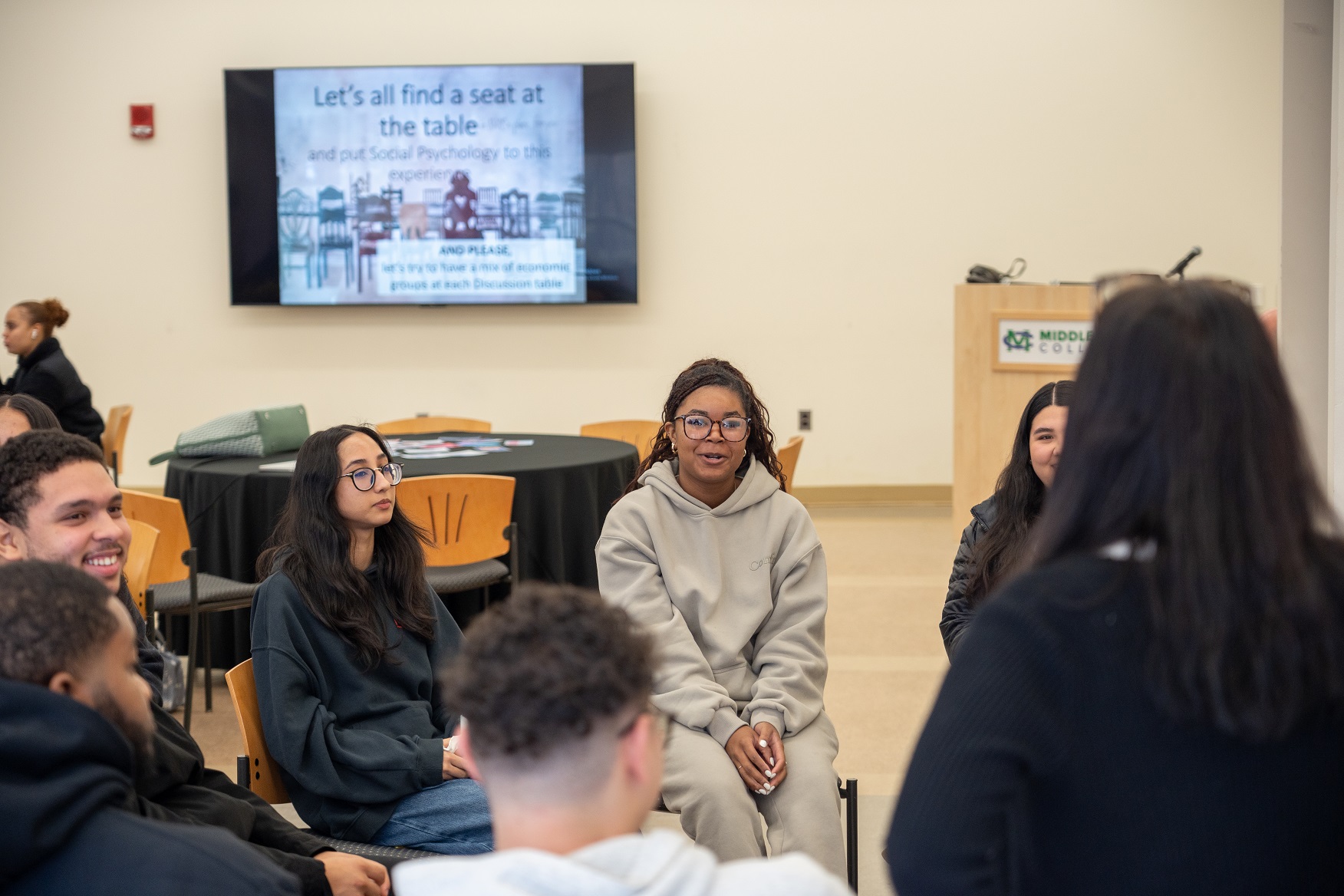
After 15 minutes, Gonzalez opened the banquet for all and the students engaged in conversation back at the tables.
“I have a sense that 10 to 15 minutes is enough to bring out some real emotions, to feel the experience and feel the disparity,” said Gonzalez.
The Hunger Banquet serves as a way to get students thinking about how everything is connected, what you eat, how much you eat, who you share meals with, and how it feels to be at a full table as opposed to sitting on the floor.
Gonzalez would like to keep the concept of a Hunger Banquet going on campus.
“I don’t necessarily want to make it bigger, because I think this makes it intimate enough that you have the feeling and disparity, and you have enthusiastic discussion groups,” Gonzalez said. “The students are brainstorming the different iterations and rules to add.”
